Why Losing Weight as an ADHD Mom Is Hard (and What Finally Worked for Me)
When you become a mom, your body changes. Your hormones shift instantly after giving birth, and it can take a long time for things to settle. Add a new baby, sleepless nights and society telling you to “bounce back” and “lose the baby weight,” and you feel like you’re failing before you’ve even started.
Now add ADHD.
Suddenly it’s not just the weight. It’s the forgotten meals, the 4pm toast-and-coffee “lunch,” the dinner decision you have no brain left for, and the Monday-morning fresh start that’s dead by Wednesday. I’ve been there.
This year, I lost 12kg while working from home as an ADHD mom, with a walking desk and a lot of small habits that stuck. It took me the whole year, with no perfect plan and no perfect week.
Why it’s harder with ADHD (it’s not a willpower problem)
If you’ve struggled, I want you to know it isn’t a character flaw. A large meta-analysis found that about 28% of adults with ADHD had obesity, compared with about 16% of adults without it. Research also links ADHD in adults to a higher risk of binge eating, with impulsivity and emotional dysregulation as key factors.
In other words, our brains deal with impulsivity, big feelings and executive function (planning, deciding, remembering to eat) on top of everything else. Dieting advice that assumes endless planning and consistency was never written for us. So I stopped trying to follow it and built a system that works with my brain.
What helped me lose 12kg this year
1. Protein first, fiber second, then coffee
I used to start the day on coffee alone, then crash and graze. Now the order matters: protein first, fibre next, coffee after. I stay fuller for longer, I’m not chasing snacks by 10am, and my focus is steadier. Having a rule is what makes it ADHD-friendly. I don’t have to think, I just follow the order.
If you are like me and you struggle to eat in the morning don’t force a meal. A protein shake or protein juice gets you the protein you need without force feeding yourself a farmhouse breakfast. It also saves you calories for later in the day.
2. Staying hydrated
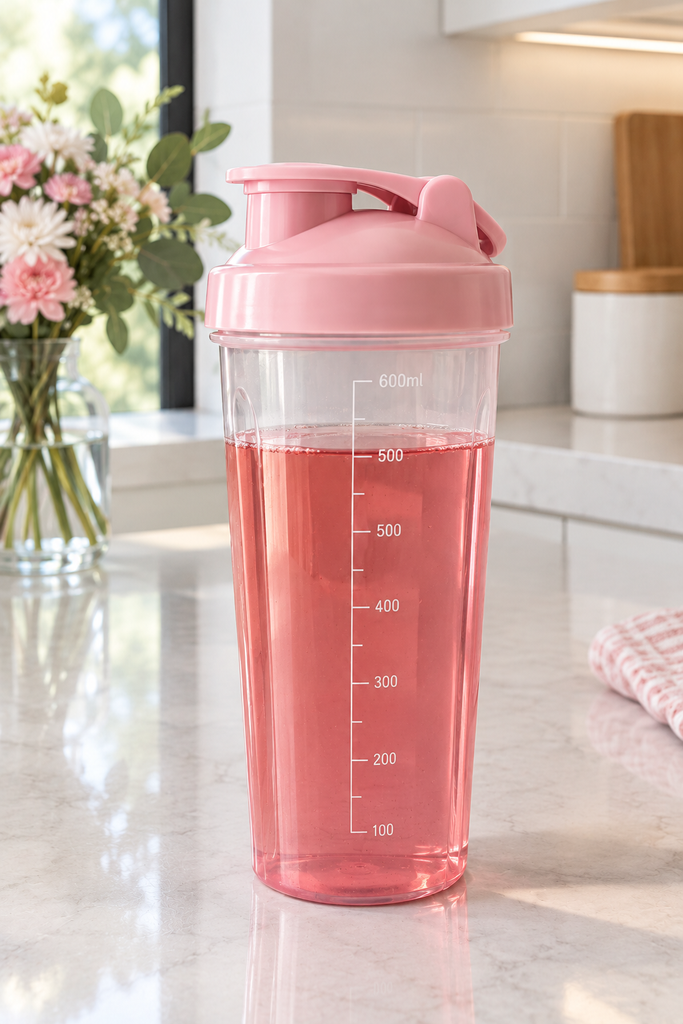
Thirst and hunger can feel very similar, and ADHD brains are great at forgetting to drink. I keep a big water bottle with me wherever I go. It’s not glamorous, but it works. I also use the ponytail method to keep track of how much I’ve had to drink. I aim for around 3l of water a day so I keep three blue hair ties on my wrist. For each litre I drink I move a hair tie across to the other wrist. It’s a visual reminder and tracking tool all in one.

3. 15,000 steps a day
This sounds like a lot, but a big chunk of it happens while I work. I have a walking desk, so I’m moving through emails, calls and writing instead of sitting still. I add the school run and an evening walk, and the steps add up without me carving out gym time I don’t have. It also helps my ADHD focus, because moving while I work keeps my brain switched on.
Now don’t jump the gun here. If you are currently doing only 2000-5000 steps a day, 15k feels like an impossible target. I know it was when I started. Start by increasing your steps by 500-1000 steps a day per week, you will get there in no time. Walking during phone calls is a great first step.
4. Prepping salad ingredients for the week
I don’t prep whole meals. That’s too much for my brain. I wash, dry and chop lettuce, cucumber and peppers once a week and keep them in containers. When I’m hungry and overwhelmed, a salad is two minutes of assembly instead of a project. Reducing the effort between me and a good choice has been huge.
5. A set of five weekly dinners
Decision fatigue is real, and “what’s for dinner?” at 5pm is the enemy, especially when you have forgotten what exists in the deep freeze. We rotate the same five meals every week. No scrolling for recipes, no panic, no takeaway because I couldn’t decide. Boring? A little. Freeing? Absolutely.
6. Tracking calories (without under-eating)
You can’t lose weight without a calorie deficit, and tracking is how you find out where you really are. Eating the same meals most weeks makes this so much easier, because once a meal is logged, I can just repeat it.
The trap is going too low. When you’re carrying extra weight, it’s tempting to slash calories and get it over with. But 1,200 calories is what my toddler should be eating, not me. An online calculator can give you a moderate deficit based on how active you are, and it pays to aim for a range instead of one exact number. No day is perfect, and with ADHD, hitting the same number every single day is a big ask. A range gives you room.
Macros matter too: protein, carbs and fats, plus fibre. I aim for 1g of protein per lb of my goal weight (about 2.2g per kg).
If you’re not sure where to start, track everything you eat for a week without changing anything, then work from there. You might find you’re eating a lot more than you realised. I certainly was, especially when I was finishing my toddler’s leftovers because I hadn’t eaten all day.
7. Giving up the all-or-nothing mindset
This was the hardest one, and I think it mattered most. All-or-nothing thinking is very common in ADHD women: I ate a biscuit, so today is ruined, so I may as well start again Monday.
The research backs up that this pattern costs us. A Dutch study of 241 people found that people who think about food in good-or-bad terms tend to write off a whole diet after one slip, then overeat, while flexible thinkers can have an off night and return to their routine the next day. That flexibility may be why they do better at keeping weight off. A separate study of weight-loss surgery patients found that all-or-nothing thinking about food played a central role in maintaining weight loss.
So I now follow the “next meal” rule: one off meal stays one meal. I don’t need a perfect day, just the next good choice. Honestly, that shift did more for me than any food rule.
It’s also why I never gave up chocolate. I just fit it into my calories, so it never became a forbidden food that I’d end up blowing my whole day over.
A quick note
I’m not a doctor or dietitian, and this is simply what worked for me. If you have ADHD, are on medication, or have a history of disordered eating, please talk to your GP before changing your eating or exercise. If food feels out of control, getting support is a strength, not a failure.
Start with one thing
It took me the whole year, and that’s okay. Slow and steady isn’t failing. For an ADHD brain, it’s the version that actually lasts.
So please don’t try to do all six at once. That’s the all-or-nothing trap in disguise. Pick the one that feels easiest (for most people, that’s the water bottle or the salad prep) and do it for a week.
You’re not failing. You’re a mom with an ADHD brain doing a lot, and you can build a system that gives that brain a break.
Which of these would you try first? Tell me in the comments.
Sources
- Association between ADHD and obesity: a systematic review and meta-analysis
- Risk for developing eating disorders in adults with ADHD: an integrative literature review
- Dichotomous thinking leads to difficulties in losing weight (Resource, Wageningen)
- Weight loss after weight-loss surgery: the mediating role of dichotomous thinking